
Your Org Chart, built by everyone in it. Then it talks back.
Snitch asks every person in your Slack who they report to, remembers the answer, and tells anyone who asks. No HR system to connect, and nothing for you to fill in.
 Snitch
 Pam Beesly
 Kevin MaloneSnitchAGENT
SnitchAGENT9:41 AM

Jim Halpert9:41 AM
SnitchAGENT9:41 AM
Jim Halpert9:42 AM
SnitchAGENT9:42 AM
Used by your favorite fictional companies.
How it works
Two clicks for you, one question for everyone else.
Right now, past twenty people, the truth lives in a slide from last quarter, a spreadsheet called FINAL_v3, and whoever is online when you ask.
Allow Snitch to accessDunder Mifflin
View people. Send DMs. Nothing else.
1. Add it to Slack
One click through Slack OAuth. Snitch reads the directory, then does nothing until you say so.
I can see 50 people in your Slack. Anyone I should skip?
2. Approve the rounds
Exclude anyone, read the exact message everyone gets, then press Launch. Nobody is DMed before that.
Snitch AGENT 9:41 AM
Hey Pam. Quick one, once: who do you report to?
Pam Beesly 9:42 AM
Jim
3. Snitch asks around
Everyone answers in two taps, the chart draws itself, and Snitch comes back when something changes.
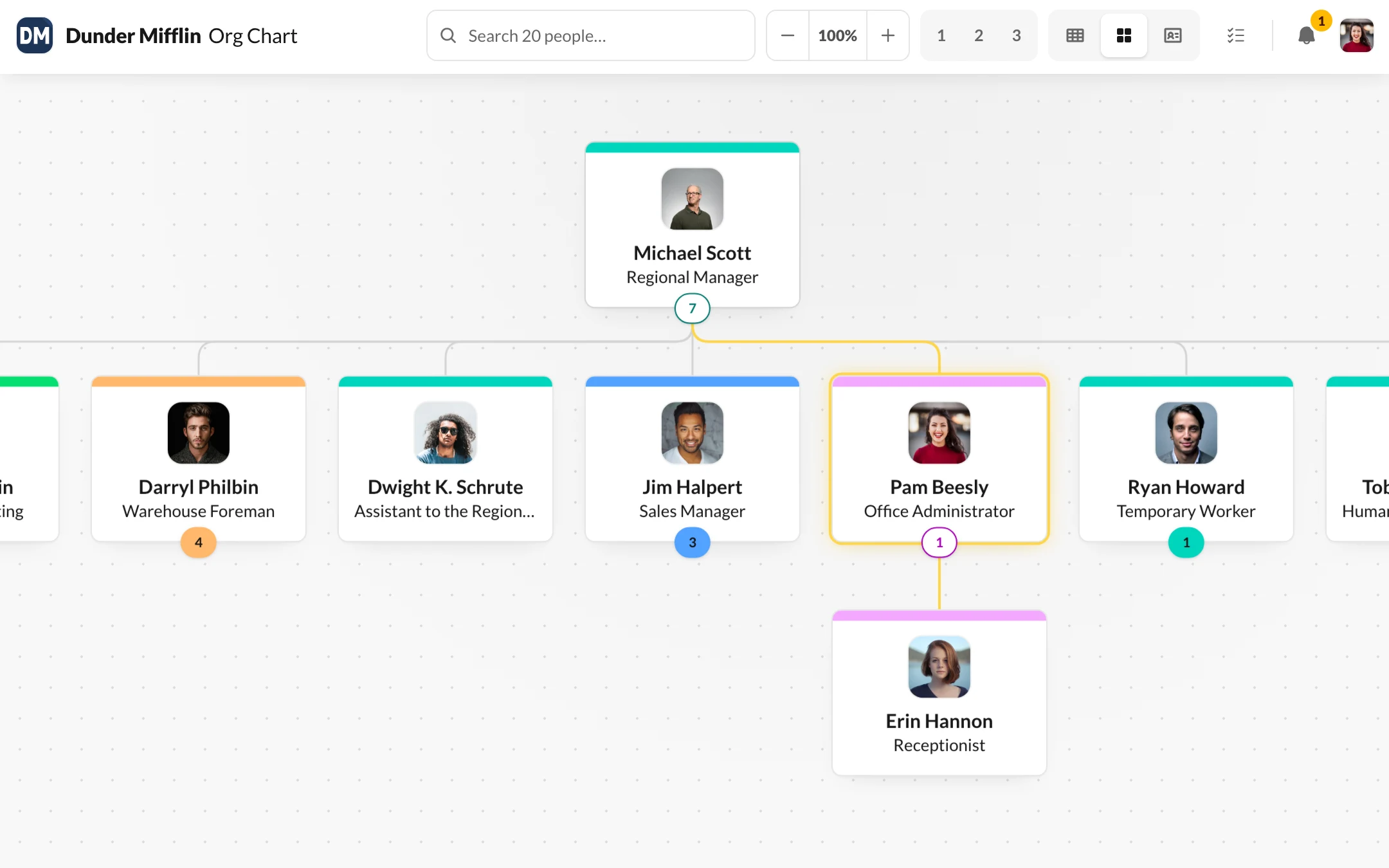
After day one
The chart was the easy part.
Every Org Chart ever made was accurate for about a week. Then somebody joined, somebody left, and nobody told the chart. This is the week after.
Snitch AGENT 9:01 AM
Morning Holly, welcome aboard. One thing, once: who do you report to?

Holly Flax 9:01 AM
Michael
Someone joins
Holly starts Monday. Snitch asks her that morning, and she is on the chart before her laptop arrives.

Angela Martin 2:12 PM
i report to oscar now, since the reorg
Snitch AGENT 2:12 PM
Moved. The chart says Oscar as of this afternoon.
Something changes
Angela's line moved in a meeting nobody wrote down. She tells Snitch, and the chart moves with her.
Manager left

Roy Anderson left in April. Three people still report to the empty chair.
Ask them again. One click, and all three get the question they answered on day one.
Nobody says anything
Roy left in April. Three people still point at his chair, so Snitch flags it and asks them who now.
Features
What Snitch does all day.
It talks back.
A reporting chain, a team size, the owner of a thing. Asked in plain language, answered in plain language, without leaving the channel.
Michael Scott11:32 AM
SnitchAGENT11:32 AM
It asks, instead of guessing.
Every line came from the person standing on it. Nothing inferred from a profile field, nothing guessed, nothing for you to correct later.



9 asked, 9 answered, chart complete.
HR systems connected: none.
It tells on itself.
Missing managers, reporting loops, the occasional second CEO. The chart flags what is wrong instead of going quietly stale.
Missing manager

Meredith Palmer reports to Charles Miner, who left in March.
Reporting loop
Jim Halpert reports to Dwight, who reports to Jim. That's a demerit.
Second CEO
Dwight Schrute, Assistant to the Regional Manager, is now CEO.
Manager left
Ryan Howard left Slack. Kevin and Erin still report to the empty chair.
It remembers the small stuff too.
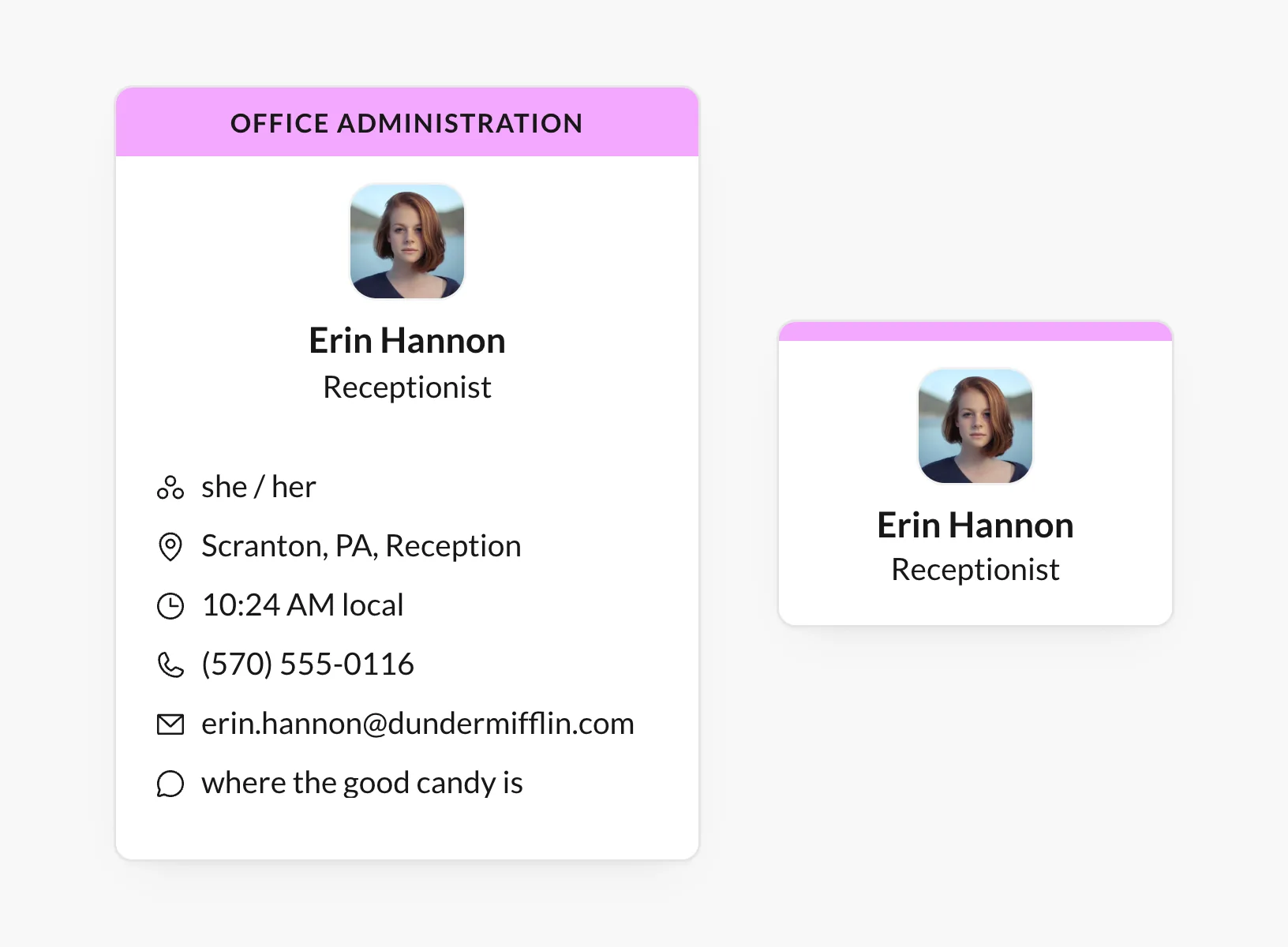
Everyone fills in their own card, so a day-three hire knows who to ask about what, who is in which timezone, and that it is Erin, not Kelly.
Pricing
Three sizes, everything included.
Every plan starts with 14 days free, no card.
The live chart, cards people fill in themselves, flags for loops and departed managers, and @Snitch answering questions in any channel. All of it, in every plan.
FAQ
The slightly nervous questions.
Okay, but is this creepy?
What does Snitch actually see?
Why does Slack say the app is unverified?
What if someone lies?
Who can see the chart?
Can I keep contractors, execs or the founder's dog out of it?
Do people have to answer?
What happens if we uninstall?
Missing manager
Meredith Palmer reports to Charles Miner,
who left in March.
Somewhere in your company, someone still thinks they report to Charles.
Not their fault. Nobody asked them since. Snitch asks, and by tonight every line points at someone who actually really works there.